Disease control for lawn, garden and house plants is essential for healthy growth and longevity. Our staff can help identify the disease and find a way to control it. Most fungicides protect healthy leaves rather than cure damaged ones, so timing matters.
Lawn disease control
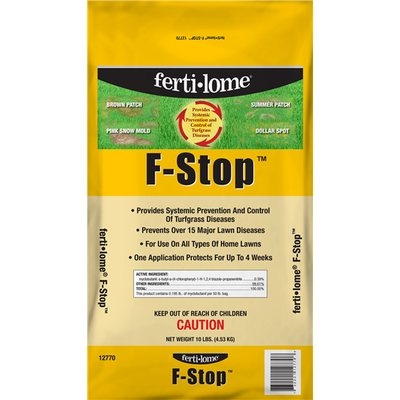
Ferti-lome
F-Stop Lawn Fungicide Granules
Lawns. Spread with a fertilizer spreader and water in.
Active ingredient: myclobutanil
We match it to: brown patch, large patch
When: A preventive program, before disease shows: brown patch every 14 days, rust and dollar spot every 14–28 days.
How: Spreader at 4 lb per 1,000 sq ft, half each direction; water lightly after.
Good to know: People and pets off until the dust settles, or once watered in, until dry.

BioAdvanced
Fungus Control for Lawns (granules)
Lawns. Spread and water in.
Active ingredient: propiconazole
We match it to: brown patch, dollar spot, lawn rust, leaf spot and melting out, summer patch
When: At the first sign of disease (curative) or before it usually shows (preventive). Summer patch: start mid-May.
How: Spreader; water the lawn after so it reaches the roots. Up to 5 times a year.
Good to know: People and pets off until watered in and dry. No rain forecast for 24 hours.
Garden, rose, fruit and landscape fungicides
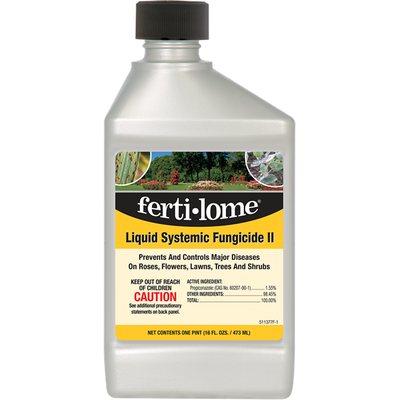
Ferti-lome
Liquid Systemic Fungicide II
Lawns, trees, shrubs and roses. Not for vegetables.
Active ingredient: propiconazole
We match it to: brown patch, large patch, dollar spot, lawn rust, leaf spot and melting out, summer patch, anthracnose
When: To prevent disease or at the first sign; it won’t cure damage already there. Lawn brown patch: start May or June.
How: Mix per the label chart and spray to runoff. Lawns: 3–5 fl oz per gallon per 250 sq ft, every 10–21 days by disease.
Good to know: Rainproof once dry. People and pets off until dry. Not on food crops grown for sale; crabapple fruit not for eating.

Bonide
Infuse Systemic Disease Control
Lawns, roses, flowers, trees and shrubs. Not for vegetables.
Active ingredient: propiconazole
We match it to: large patch, dollar spot
When: Preventive or at the first sign; it won’t cure what’s already there. About every 10–21 days on lawns.
How: Spray until it just runs off the leaves; let it dry before watering or mowing.
Good to know: Rainproof once dry. Off until dry. Not on African violets, begonias, Boston ferns or geraniums.
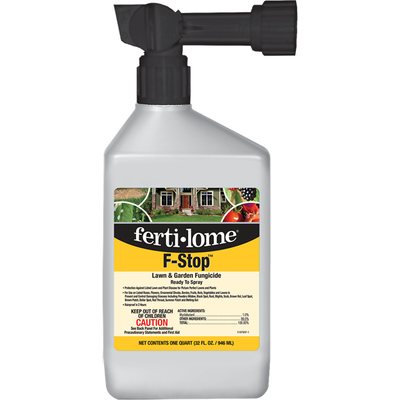
Ferti-lome
F-Stop Lawn & Garden Fungicide
Lawns, roses, flowers and fruit trees; check the label for each plant.
Active ingredient: myclobutanil
We match it to: lawn rust, lawn powdery mildew, leaf spot and melting out, black spot on roses, cedar apple rust, apple scab
When: Lawns from spring green-up; roses every 7–14 days. Not at 90°F or above.
How: Lawns: 5⅓ fl oz per gallon per 250 sq ft; roses and flowers 1½ fl oz per gallon.
Good to know: No rain forecast for 24 hours. Apples and grapes: stop 2 weeks before harvest. Off until dry.
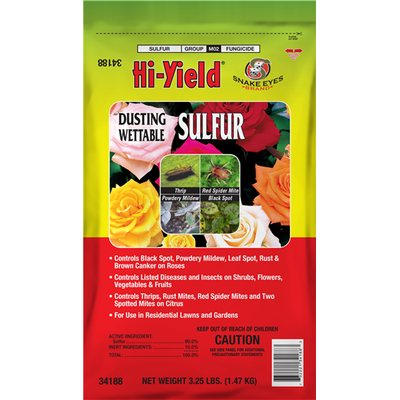
Hi-Yield · Organic
Dusting Wettable Sulfur
Flowers, roses and fruit. Dust or spray; skip it in heat above about 85°F.
Active ingredient: sulfur
We match it to: lawn powdery mildew, black spot on roses, apple scab, peony botrytis
When: Roses: from new spring growth, every 7–10 days and after rain. Apples: pre-pink through cover sprays.
How: Spray 4 Tbsp per gallon, or dust to cover. Not on squash, cucumbers or melons.
Good to know: Can burn leaves at 90–95°F. Not within 2 weeks of an oil spray. Keep children and pets off for 24 hours.
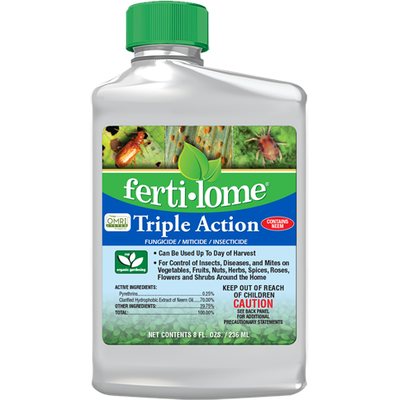
Ferti-lome Green · Organic
Triple Action
Roses, flowers and vegetables. Neem oil for leaf diseases; it also controls many insects.
Active ingredient: neem oil, pyrethrins
We match it to: lawn powdery mildew, black spot on roses, gray mold
When: Early-to-midmorning or late afternoon; every 7–14 days (weekly while disease is active).
How: 2 Tbsp per gallon. Not below 45°F, on wilted plants or new transplants; test on impatiens, fuchsia, hibiscus.
Good to know: Up to the day of harvest. Toxic to bees on contact: don’t spray while bees are visiting. Off until dry.
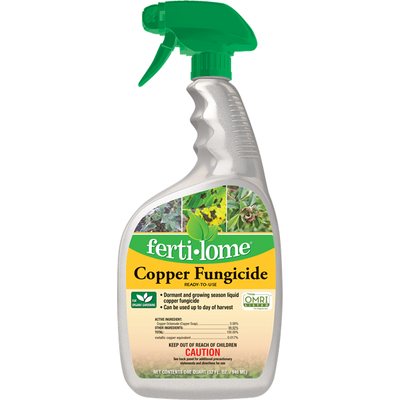
Ferti-lome Green · Organic
Copper Fungicide
Vegetables, fruit, roses and flowers. Protects leaves before disease spreads.
Active ingredient: copper soap
We match it to: black spot on roses, cedar apple rust, gray mold, early blight on tomatoes, Septoria leaf spot on tomatoes, downy mildew, peony botrytis
When: Before disease shows or at the first spots; repeat every 7–10 days. Tomatoes: start 2 weeks before disease usually appears.
How: ½–2 fl oz per gallon (roses about 1½). Spray leaves top and bottom.
Good to know: Can be used up to harvest. People and pets off until dry. Can mark some roses; cool, damp weather under 60°F raises the risk.
Bonide
Captan Fruit & Ornamental
Apples and other fruit, and roses.
Active ingredient: captan
We match it to: apple scab
When: Apples: prebloom through first cover sprays, every 10–14 days.
How: Wettable powder: 1½ Tbsp per gallon for apple scab. Not with or right after oil sprays; not alongside sulfur on Red Delicious.
Good to know: Apples can be sprayed up to harvest. People and pets off until dry. Not for lawns.
Ferti-lome
Broad Spectrum Landscape & Garden Fungicide
Vegetables, fruit, roses and flowers. Its label lists tomato early blight, Septoria leaf spot and gray mold, and downy mildew on cucumbers, melons and squash. Not for lawns.
Active ingredient: chlorothalonil
We match it to: gray mold, early blight on tomatoes, Septoria leaf spot on tomatoes, downy mildew, anthracnose
When: When dew or rain make disease likely: tomatoes every 7–10 days, squash family every 7 days, roses every 7–14.
How: Tomatoes about 6 tsp per 200 sq ft. Not on lawns; skip very hot, sunny days and wilted plants.
Good to know: Tomatoes and squash: up to the day of harvest. Off until dry.
Bonide
Fung-onil
Vegetables, fruit, roses and flowers. Not for lawns.
Active ingredient: chlorothalonil
We match it to: peony botrytis
When: When dew or rain makes disease likely; repeat every 7–14 days (7 in wet weather). Peonies: as shoots come up.
How: 2¼ tsp per gallon for flowers and shrubs. Not on lawns; flowers sprayed in bloom may be marked.
Good to know: Tomatoes and squash: up to harvest. Not within a week of an oil spray. Off until dry.
Always read and follow the product label. The label is the law and overrides anything on this page, including site, rate, timing and waiting periods. Not sure what you’re dealing with? Bring us a photo or a sample, or call the Garden Center at (816) 444-3403. Our free My Garden app also has a Kansas City guide to weeds, pests and plant diseases with these same product notes.