
Care notes & varietiesGrowing basics for the plants on this page, from our free My Garden app
Availability changes through the season, so call or stop by to check what’s in.
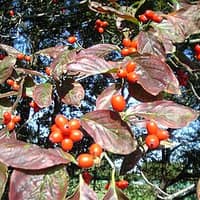
- Part sun – part shade
- Moderate water
- 15–30 ft. tall × 15–30 ft. wide
- Blooms April–May
- Zones 5–9
Kansas City: Beautiful native understory tree best in protected sites with morning sun and good soil moisture.
- Pruning: Prune after flowering only as needed
- Feeding: Light to moderate. If needed, feed during spring growth.
- Watering: Water deeply and less often while establishing; once established, water during extended dry periods rather than on a fixed shallow schedule.
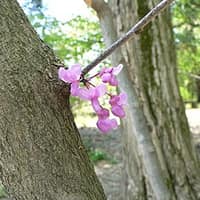
- Eastern RedbudFull sun – part shade · 20–30 ft. tall
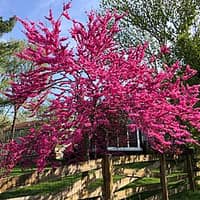 Oklahoma RedbudFull sun · 20–30 ft. tall
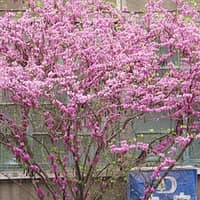 Chinese RedbudFull sun · 8–12 ft. tall
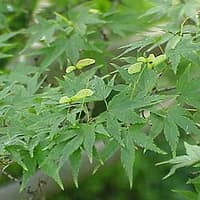
- Morning sun – part shade
- Moderate water
- 10–25 ft. tall × 10–25 ft. wide
- Blooms April–May
- Zones 5–8
Kansas City: Excellent specimen tree for protected Kansas City gardens with filtered afternoon shade.
- Pruning: Light pruning late winter; avoid overpruning
- Feeding: Light to moderate. If needed, feed during spring growth.
- Watering: Water deeply and less often while establishing; once established, water during extended dry periods rather than on a fixed shallow schedule.
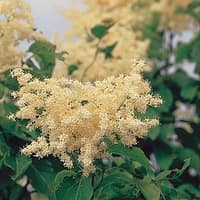
- Full sun
- Moderate water
- 20–30 ft. tall × 15–25 ft. wide
- Blooms May–June
- Zones 3–7
Kansas City: Full sun, 20–30 ft tall; blooms May–June. Deer resistant.
- Feeding: Light to moderate. If needed, feed during spring growth.
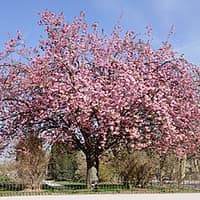
- Full sun
- Moderate water
- 15–25 ft. tall × 15–25 ft. wide
- Blooms April
- Zones 5–8
Kansas City: Showy spring blossoms in white to deep pink.
- Pruning: Prune right after flowering
- Feeding: Light to moderate. If needed, feed during spring growth.
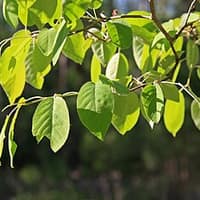
- Full sun – part shade
- Moderate water
- 15–25 ft. tall × 15–25 ft. wide
- Blooms March–April
- Zones 4–9
Kansas City: Native multi-season small tree with spring flowers, edible fruit, and good fall color.
- Pruning: Prune after flowering or dormant season
- Feeding: Light to moderate. If needed, feed during spring growth.
- Watering: Water deeply and less often while establishing; once established, water during extended dry periods rather than on a fixed shallow schedule.
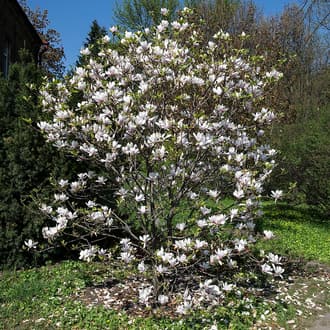
- Saucer MagnoliaFull sun – part shade · 20–25 ft. tall
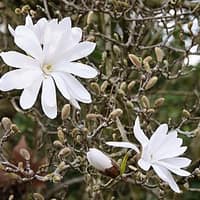 Star MagnoliaFull sun – part shade · 15–20 ft. tall
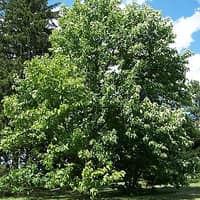 Cucumber MagnoliaFull sun – part shade · 50–80 ft. tall
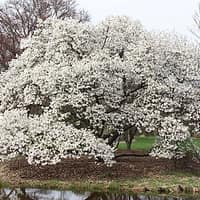 Kobus MagnoliaFull sun – part shade · 25–30 ft. tall
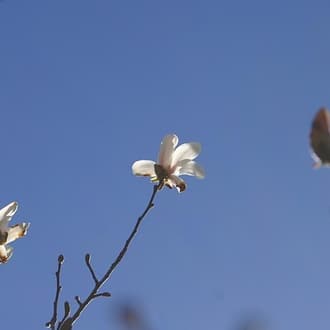 Loebner MagnoliaFull sun – part shade · 8–30 ft. tall
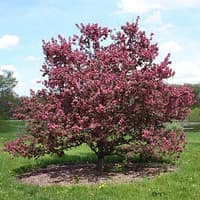
- Flowering CrabappleFull sun · 15–25 ft. tall
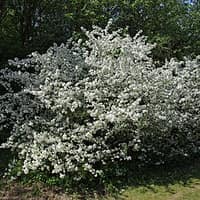 Sargent CrabappleFull sun · 8–12 ft. tall
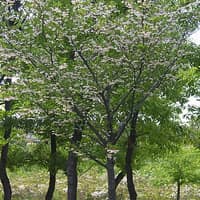
- Full sun – part shade
- Moderate water
- 20–30 ft. tall × 20–30 ft. wide
- Blooms May–June
- Zones 5–9
Kansas City: Hanging white bell flowers under the branches in late spring.
- Pruning: Prune in winter to shape
- Feeding: Light to moderate. If needed, feed during spring growth.
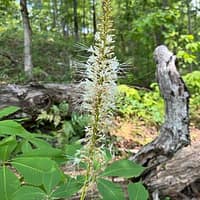
- Bottlebrush BuckeyePart sun – part shade · 8–12 ft. tall
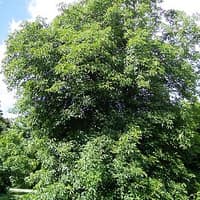 Ohio BuckeyePart shade · 20–40 ft. tall
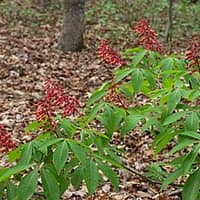 Red BuckeyePart shade · 15–25 ft. tall
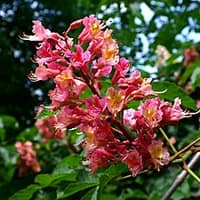 Red HorsechestnutFull sun – part shade · 30–40 ft. tall
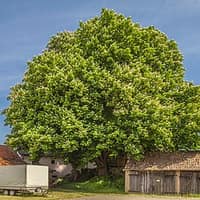 Common HorsechestnutFull sun – part shade · 50–75 ft. tall
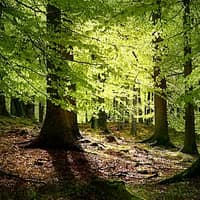
- Full sun – part shade
- Moderate water
- 50–60 ft. tall × 35–50 ft. wide
- Blooms April–May
- Zones 4–7
Kansas City: Smooth gray bark and golden-bronze fall color; many purple and weeping forms.
- Pruning: Tolerates pruning as a hedge
- Feeding: Light to moderate. If needed, feed during spring growth.
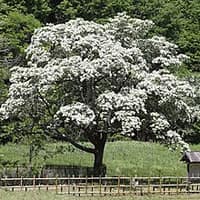
- Chinese FringetreeFull sun – part shade · 10–30 ft. tall
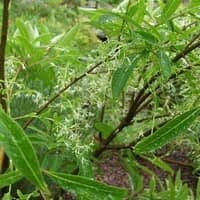 White FringetreeFull sun – part shade · 12–20 ft. tall
Photo credits
- Flowering Dogwood: No machine-readable author provided. Koba-chan assumed (based on copyright claim / Wikimedia Commons, CC BY 2.5 (source)
- Redbud: Wikimedia Commons contributor, CC BY-SA 3.0 (source)
- Oklahoma Redbud: Famartin / Wikimedia Commons, CC BY-SA 4.0 (source)
- Chinese Redbud: Wikimedia Commons contributor, CC BY-SA 3.0 (source)
- Japanese Maple: Kurt Stüber [1] / Wikimedia Commons, CC BY-SA 3.0 (source)
- Japanese Lilac: Herman, D. E., et al. (1996). North Dakota tree handbook. / Wikimedia Commons, Public domain (source)
- Flowering Cherry: Myrabella / Wikimedia Commons, CC BY-SA 3.0 (source)
- Serviceberry: Dcrjsr / Wikimedia Commons, CC BY 3.0 (source)
- Magnolia: Lystopad / Wikimedia Commons, CC BY-SA 4.0 (source)
- Star Magnolia: Myrabella / Wikimedia Commons, CC BY-SA 3.0 (source)
- Cucumber Magnolia: Bruce Marlin / Wikimedia Commons, CC BY 3.0 (source)
- Kobus Magnolia: Bruce Marlin / Wikimedia Commons, CC BY-SA 3.0 (source)
- Loebner Magnolia: David J. Stang / Wikimedia Commons, CC BY-SA 4.0 (source)
- Disease-resistant Crabapples: Bruce Marlin / Wikimedia Commons, CC BY 3.0 (source)
- Sargent Crabapple: Chrumps / Wikimedia Commons, CC BY-SA 4.0 (source)
- Japanese Snowbell: Dalgial / Wikimedia Commons, CC BY-SA 3.0 (source)
- Buckeye: dylanshaw / Wikimedia Commons, CC BY 4.0 (source)
- Ohio Buckeye: Wikimedia Commons contributor, CC BY-SA 3.0 (source)
- Red Buckeye: Eric Hunt / Wikimedia Commons, CC BY-SA 3.0 (source)
- Red Horsechestnut: Rüdiger Wölk This photo was taken by Rüdiger Wölk. Please credit this photo Rüdi / Wikimedia Commons, CC BY-SA 2.5 (source)
- Common Horsechestnut: Stephan van Helden / Wikimedia Commons, CC BY-SA 4.0 (source)
- Tricolor Beech: Malene Thyssen / Wikimedia Commons, CC BY-SA 3.0 (source)
- Fringe Tree: Alpsdake / Wikimedia Commons, CC BY-SA 4.0 (source)
- White Fringetree: Wikimedia Commons contributor, Public domain (source)


From the Soil Service counter
Our own handouts on this topic, free to read or print:
- Mycorrhizae (PDF)
- Apple & Pear Scab (PDF)
See all our handouts › · Questions? Call (816) 444-3403