Few things are more frustrating than spending time, money and love on a lush lawn or garden, only to have insects and other pests move in. With so many options available, it is easy to get lost. Our staff can help you sort out what you have and which product fits: contact or systemic, organic or conventional, and when to apply it.
Lawn insects and grubs
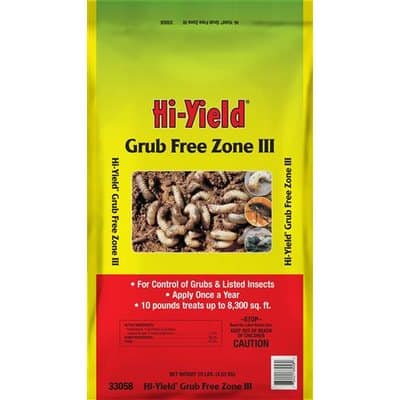
Hi-Yield
Grub Free Zone III
Lawns. Preventive: apply before or during beetle egg-laying (mid-June to late July in Kansas) and water in within 24 hours.
Active ingredient: imidacloprid
We match it to: lawn grubs, billbugs
When: Before grubs hatch, during egg-laying season (MU/K-State: mid-June to late July). Billbugs: before egg hatch.
How: Spreader, 1.4–1.8 lb per 1,000 sq ft. Water in within 24 hours; don’t mow until it’s watered in.
Good to know: Never on linden (Tilia) trees. Not on waterlogged ground.
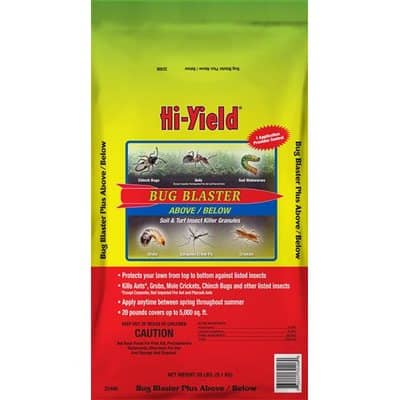
Hi-Yield
Bug Blaster Plus Above & Below
Lawn granules. Its label lists grubs, sod webworms, armyworms and billbugs: one application any time May through mid-August, best before the pest’s eggs hatch. Water in. Highly toxic to bees: don’t spread over blooming clover or weeds.
Active ingredient: lambda-cyhalothrin, imidacloprid
We match it to: lawn grubs, sod webworms, fall armyworms, billbugs
When: Grubs: once, May to mid-August, before eggs hatch. Chinch bugs: before nymphs hatch.
How: Spreader, 3.4–4.6 lb per 1,000 sq ft. Water in within 24 hours.
Good to know: Don’t mow until watered in and dry; children and pets off until then. Highly toxic to bees: mow blooming clover first.

BioAdvanced
24 Hour Grub Killer Plus
Lawn granules that work on contact, for grubs that are feeding now (the label says July through September is best). The label also lists sod webworms, armyworms, chinch bugs and billbugs. Water in as the label directs.
Active ingredient: trichlorfon
We match it to: lawn grubs, sod webworms, fall armyworms, chinch bugs, billbugs
When: When grubs or damage show, best July through September while grubs are young and near the surface.
How: Spreader, 2 lb per 1,000 sq ft. Water thoroughly right after, within 24 hours. Up to 3 times a year, 7 days apart.
Good to know: Don’t mow, and keep children and pets off, until watered in and dry.
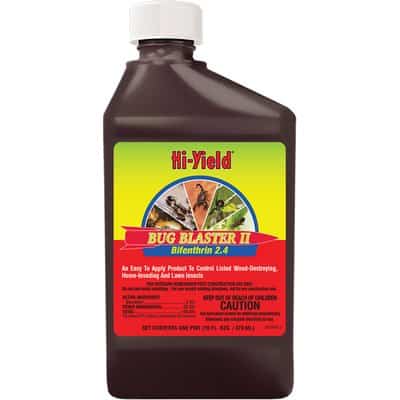
Hi-Yield
Bug Blaster II Bifenthrin 2.4
Broad outdoor insect control. Highly toxic to bees: never spray plants in bloom.
Active ingredient: bifenthrin
We match it to: sod webworms, fall armyworms, chinch bugs
When: When insects show up in the lawn; repeat only if they come back, no more than once every 7 days.
How: Lawns: 1 Tbsp per gallon over 167 sq ft. Lawns and around the house only, not on garden or ornamental plants.
Good to know: Children and pets off until dry. Highly toxic to bees: not on blooming weeds bees are visiting.
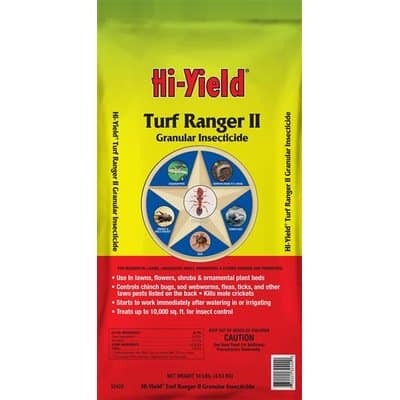
Hi-Yield
Turf Ranger II
Granules for lawns; water in to activate. Highly toxic to bees: don’t spread over blooming clover or weeds.
Active ingredient: bifenthrin, zeta-cypermethrin
We match it to: chiggers
When: When insects first appear (chinch bugs in spring; ticks about monthly May–Sept). No more than once every 7 days.
How: Spreader, 1–4 lb per 1,000 sq ft by pest. Water in right after with about ½ in.
Good to know: People and pets off until watered in and dry. No rain forecast for 24 hours.
Garden, tree and shrub insects
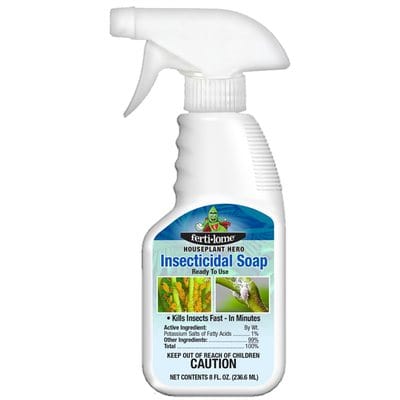
Ferti-lome Green · Organic
Insecticidal Soap
Kills on contact; spray until leaf undersides are wet.
Active ingredient: potassium salts of fatty acids
We match it to: aphids, spider mites, thrips, scale, mealybugs, whiteflies
When: When pests are present; repeat weekly or every 2 weeks.
How: It only kills insects it wets, so coat leaf undersides. Early morning, evening or cloudy days, not full sun.
Good to know: Edibles up to harvest day. Not on sweet peas, nasturtiums or delicate ferns; test a few leaves first.
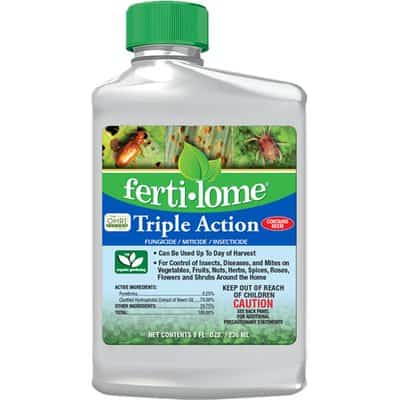
Ferti-lome Green · Organic
Triple Action
Flowers, roses, vegetables and houseplants.
Active ingredient: neem oil, pyrethrins
We match it to: aphids, japanese beetles, thrips, mealybugs
When: Early-to-midmorning or late afternoon; every 7–14 days (weekly while disease is active).
How: 2 Tbsp per gallon. Not below 45°F, on wilted plants or new transplants; test on impatiens, fuchsia, hibiscus.
Good to know: Up to the day of harvest. Toxic to bees on contact: don’t spray while bees are visiting. Off until dry.
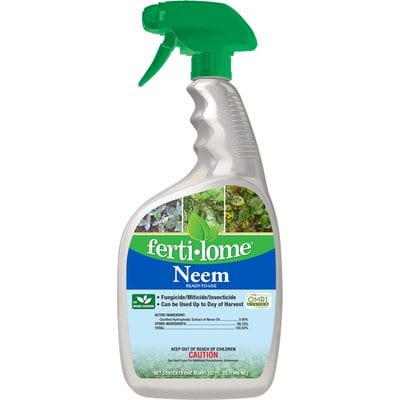
Ferti-lome Green · Organic
Neem
Flowers, vegetables and houseplants.
Active ingredient: neem oil
We match it to: aphids, thrips, whiteflies, squash bugs
When: At the first sign of pests, every 7–14 days (weekly for heavy ones). Early morning or late evening.
How: 2–4 Tbsp per gallon for insects. Test on impatiens, fuchsia, hibiscus and some roses.
Good to know: Up to the day of harvest. Toxic to bees on contact: don’t spray while they’re visiting.
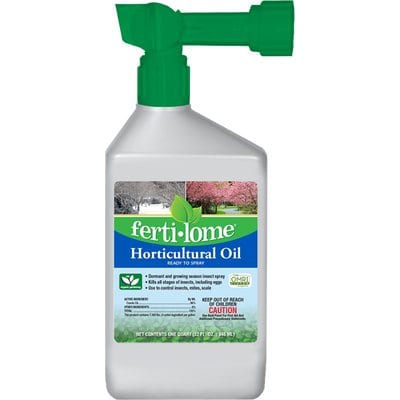
Ferti-lome Green · Organic
Horticultural Oil
Smothers soft insects, mites and scale; dormant or summer use per the label.
Active ingredient: mineral oil
We match it to: spider mites, scale, mealybugs, squash bugs
When: Dormant season or growing season; repeat in 1–2 weeks if needed.
How: Spray until wet. Not above 90°F. Takes the blue off blue spruce; test oil-sensitive plants (Japanese holly, red cedar, smoke tree).
Good to know: Wait 30 days between this and any sulfur spray.
BioAdvanced
Dual Action Rose & Flower Insect Killer
Ready-to-spray for roses, flowers, shrubs and houseplants; never on fruits or vegetables. Its label lists Japanese beetle adults. Highly toxic to bees: spray early morning or late evening.
Active ingredient: imidacloprid, beta-cyfluthrin
We match it to: japanese beetles
When: When pests appear; protects up to 30 days. Heavy infestations: every 7–14 days.
How: Spray leaves, stems and leaf undersides until coated, not dripping. Not for fruits or vegetables.
Good to know: Don’t wet the leaves for an hour. Highly toxic to bees: flowering plants only early morning or late evening. Off until dry.
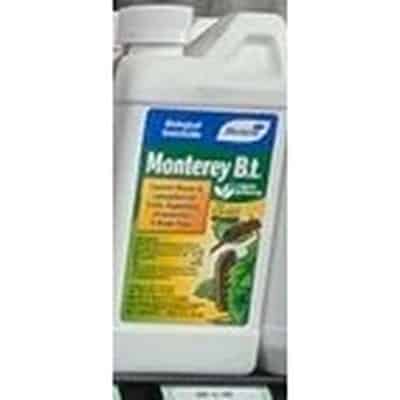
Monterey · Organic
B.t.
Caterpillars, bagworms and hornworms. Fine on vegetables up to the day of harvest.
Active ingredient: Bacillus thuringiensis kurstaki
We match it to: bagworms, tomato hornworms, fall webworms
When: When caterpillars are first seen, while small; every 5–7 days while they’re active and after heavy rain.
How: Cover the leaves they eat; they stop feeding at once but may look fine for days.
Good to know: Up to the day of harvest. No effect on honeybees or ladybugs used as directed.
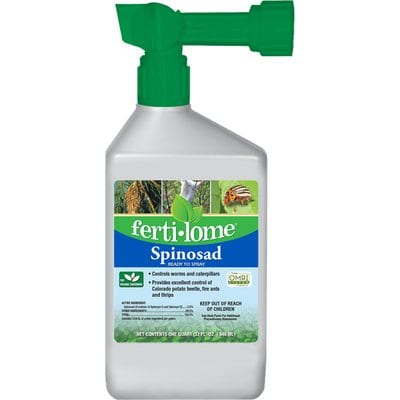
Ferti-lome Green · Organic
Spinosad
Caterpillars, bagworms, thrips and leafminers.
Active ingredient: spinosad
We match it to: bagworms, caterpillars, tomato hornworms
When: When caterpillars are present, best while they’re small; on vegetables no closer than every 4–7 days.
How: Ready to spray; cover leaves where they feed.
Good to know: Harvest waits 1 day for most vegetables (3 for squash). Toxic to bees for 3 hours: not on blooms bees visit.
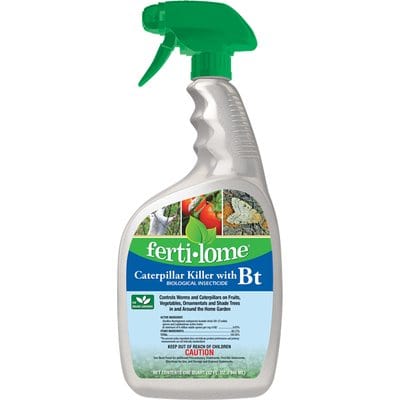
Ferti-lome Green · Organic
Caterpillar Killer Spray with Bt
Only affects caterpillars that eat sprayed leaves.
Active ingredient: Bacillus thuringiensis kurstaki
We match it to: bagworms, caterpillars, fall webworms
When: As soon as caterpillars are seen, while small; every 5–7 days while they’re active and after heavy rain.
How: Coat leaves top and bottom. Caterpillars must eat it; they stop feeding at once but may look fine for days.
Good to know: Up to the day of harvest. No effect on honeybees or ladybugs used as directed.
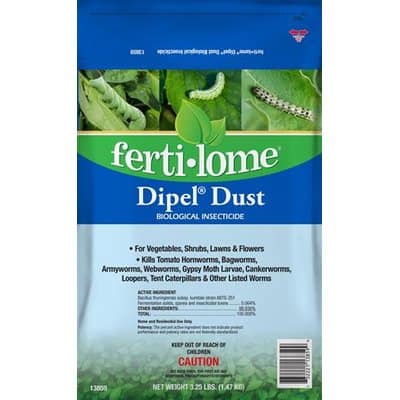
Ferti-lome · Organic
Dipel Dust
A dust for caterpillars on vegetables.
Active ingredient: Bacillus thuringiensis kurstaki
We match it to: caterpillars, tomato hornworms
When: When caterpillars appear; repeat as needed.
How: Dust to cover all plant surfaces, on a calm day with no rain due for 24 hours.
Good to know: Caterpillars must eat it to be affected.
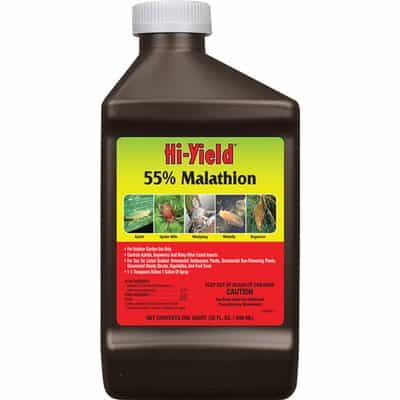
Hi-Yield
55% Malathion
Many garden insects; check the label for each plant.
Active ingredient: malathion
We match it to: whiteflies
When: When pests appear; tomatoes at least 7 days apart, ornamentals at least 10 days apart.
How: 1½ tsp per gallon (2 tsp for bagworms and scale). Not on some ferns and Crassula.
Good to know: Tomatoes, cabbage, potatoes: 7 days before harvest. Highly toxic to bees: spray in the evening, off blooms. Off until dry.
Summit · Organic
Mosquito Bits
Sprinkle on houseplant soil and water in; kills fungus gnat larvae.
Active ingredient: Bacillus thuringiensis israelensis (Bti)
We match it to: fungus gnats
When: Larvae in standing water: bird baths, rain barrels, flower pots.
How: Sprinkle on the water surface; repeat every 7–14 days.
Good to know: The bag also lists fungus gnat larvae: for potted plants, follow its directions.
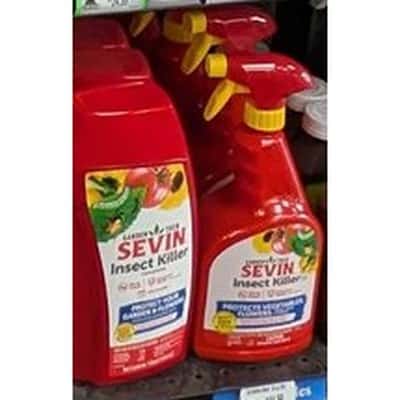
GardenTech
Sevin Insect Killer
Vegetables, fruit, flowers and lawns. A contact spray; its label lists squash bugs and squash vine borers on squash, pumpkins and cucumbers. Highly toxic to bees: spray early morning or evening, never on open flowers bees are visiting.
Active ingredient: zeta-cypermethrin
We match it to: squash bugs, squash vine borer
When: When pests appear; no more than once every 7 days.
How: 4 fl oz per gallon on squash and tomatoes. Not on trees over 10 ft.
Good to know: Harvest after 1 day. Highly toxic to bees: not on blooms they’re visiting. People and pets off until dry.
Systemic (soil-applied) insect control
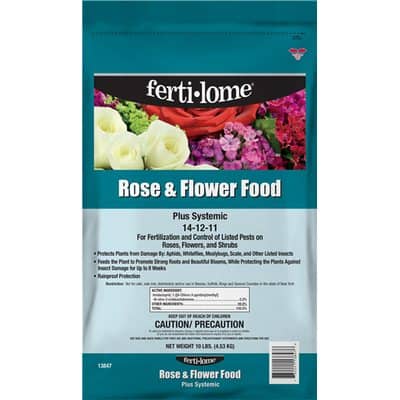
Ferti-lome · Systemic
Rose & Flower Food Plus Systemic
Feeds and protects roses, flowers and shrubs, including containers, for up to 8 weeks. Not for vegetable gardens or fruit and nut trees. Imidacloprid can harm bees that visit treated plants in bloom.
Active ingredient: imidacloprid 0.2% with 14-12-11 plant food
We match it to: aphids
When: At planting or as soon as pests are seen; every 8 weeks during the season.
How: Work into the soil and water well: roses 2 oz per plant; shrubs 4 oz per foot of height. Not for vegetables or linden.
Good to know: Children and pets off until dry. Feeds the plant at the same time.
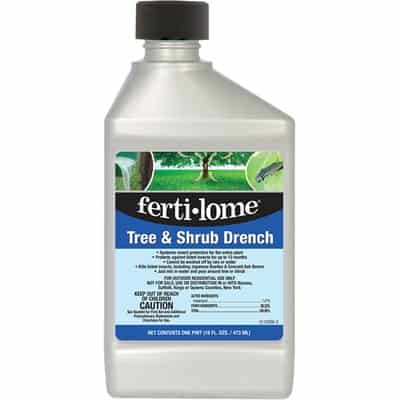
Ferti-lome · Systemic
Tree & Shrub Systemic Insect Drench
Poured around the base of trees and shrubs and taken up by the roots. Its label lists emerald ash borer and Japanese beetle adults. Highly toxic to bees: on flowering trees and shrubs, apply only after all the petals have fallen.
Active ingredient: imidacloprid
We match it to: japanese beetles, emerald ash borer
When: Once a year, early spring to early fall, 2–3 months before the pest is active; never while the tree is blooming.
How: 1 fl oz per inch of trunk around, in a gallon of water, poured around the base. Don’t water right after.
Good to know: Takes a week to 3 months to move up the tree. Never on linden. Fruit trees: 21 days before harvest.
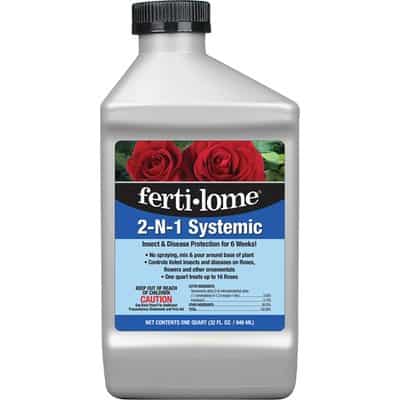
Ferti-lome · Systemic
2-N-1 Systemic
A soil drench for roses, flowers and shrubs that also helps prevent black spot, powdery mildew and rust. Not for vegetables, fruit, trees or container plants. Imidacloprid can harm bees that visit treated plants in bloom.
Active ingredient: imidacloprid, tebuconazole
We match it to: thrips, scale, whiteflies
When: Spring, once plants are growing; every 6 weeks, 3 times a year.
How: Soil drench at the base: roses 2 fl oz in a quart of water; shrubs 1 fl oz per foot of height. Not for pots or food plants.
Good to know: Highly toxic to bees: only after petals fall. Children and pets off until dry.
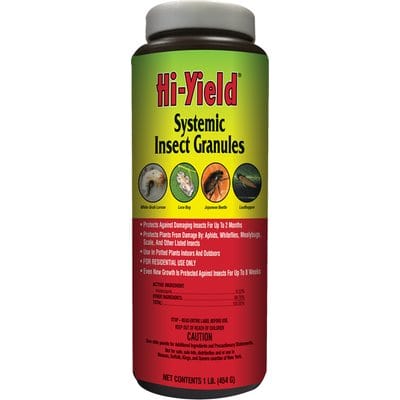
Hi-Yield · Systemic
Systemic Insect Granules
Sprinkle on the soil, mix in and water; for roses, flowers, shrubs and container plants. Not for vegetables. Imidacloprid can harm bees that visit treated plants in bloom.
Active ingredient: imidacloprid
We match it to: mealybugs
When: At planting or as soon as pests are seen; every 8 weeks during the season.
How: Work into the top 1–2 in. of soil and water in (pots by size: 2½ Tbsp for a 1-gallon pot). Not for vegetables or herbs.
Good to know: Protects new growth for up to 8 weeks.
Slugs and snails
Monterey
Sluggo
Bait pellets scattered on the soil around plants. Check the label for use around food crops.
Active ingredient: iron phosphate
We match it to: slugs and snails
When: Evening, when the soil is moist; slugs feed at night.
How: Scatter thinly around plants and garden edges, never in piles; reapply as it’s eaten.
Good to know: Can be used around vegetables and fruit.
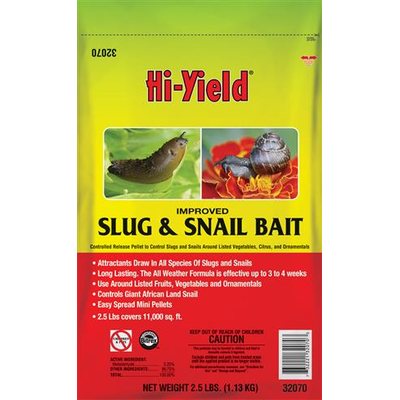
Hi-Yield
Improved Slug & Snail Bait
Bait pellets. The label allows home vegetable gardens but says to keep bait off any part of the plant you eat. Metaldehyde is poisonous to dogs and cats: keep pets out of the area.
Active ingredient: metaldehyde
We match it to: slugs and snails
When: Late in the day, after watering; every 1–2 weeks in spring and summer.
How: Scatter on the soil (1 lb per 2,000 sq ft), never in piles or on edible parts.
Good to know: Can be fatal to dogs, cats or children if eaten: keep them out of treated areas.
Always read and follow the product label. The label is the law and overrides anything on this page, including site, rate, timing and waiting periods. Not sure what you’re dealing with? Bring us a photo or a sample, or call the Garden Center at (816) 444-3403. Our free My Garden app also has a Kansas City guide to weeds, pests and plant diseases with these same product notes.